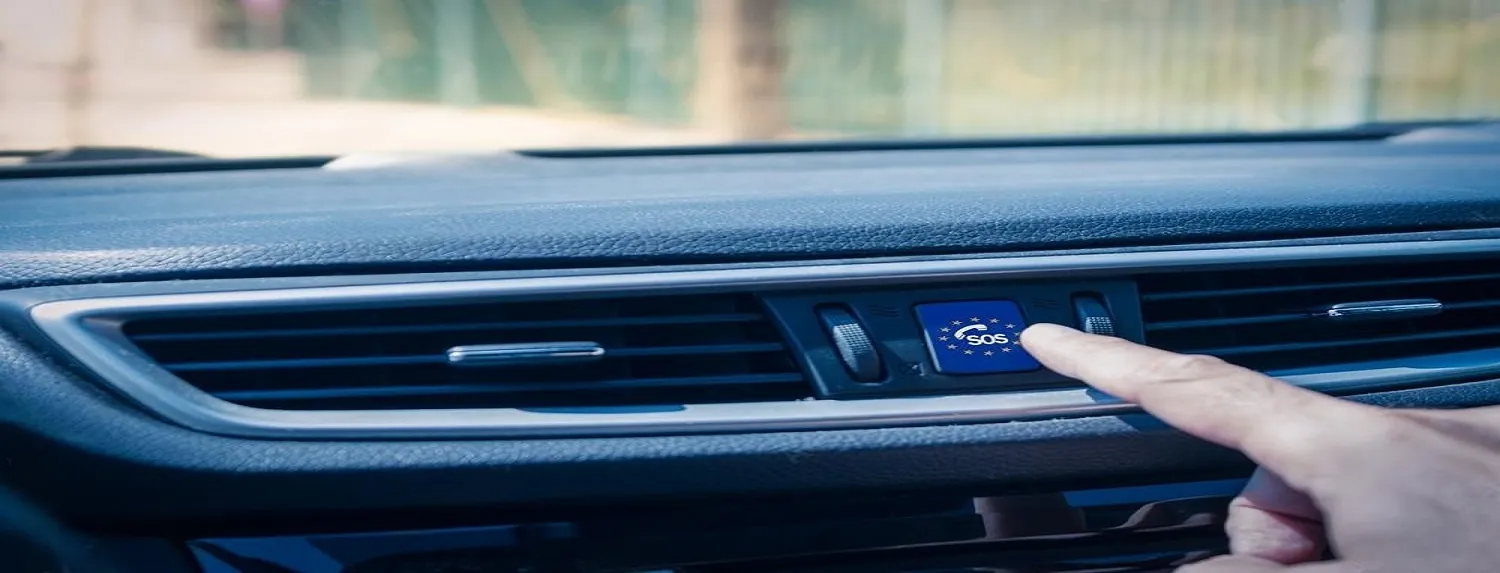
Since 2018, new vehicle types sold in the EU must support eCall: an automatic emergency call to 112 after a serious crash, with a minimum set of data (MSD) that includes the vehicle's location. The original system was built on 2G and 3G circuit-switched voice.
As operators switch off 2G and 3G networks, eCall has to move to 4G and 5G. NG eCall (next-generation eCall) carries the emergency call and its data over IMS, the same packet-based technology used for VoLTE and VoNR.
What changes for testing
NG eCall is not just a new radio bearer. Call setup, MSD transfer, callback from the emergency centre and fallback behavior all work differently, and each needs to be verified on the networks where the vehicle will be sold.
Lab first, then live
We recommend starting with network simulation in the lab, where every conformance case can be run and repeated. Live testing in target countries then confirms behavior on real operator networks and emergency infrastructure test points.
Problems found late in a vehicle programme are expensive. Testing NG eCall early, alongside the telematics unit's other connectivity features, keeps homologation on schedule.